Website Design Trends in New Zealand are changing quickly because customers now expect websites to be fast, attractive, accessible and easy to use on every...
Areesh Ishtiaq
May 14, 2026
Website Design Trends in New Zealand are changing quickly because customers now expect websites to be fast, attractive, accessible and easy to use on every device. For Auckland businesses, the challenge is not simply to follow what looks fashionable overseas. The real goal is to understand which modern website design ideas improve trust, support search visibility and help visitors take action.
Current global trend research shows a clear shift towards websites that balance visual creativity with practical performance. Figma highlights immersive design, accessibility, sustainable design and AI-supported interfaces as important directions for modern web experiences.
TheeDigital describes a similar movement towards expressive design that still prioritises fast loading, mobile-first experiences and usability.
Blue Compass also connects current web design trends with user experience, personalisation, Core Web Vitals and responsive design.
For New Zealand organisations, this means the best trends are not just decorative. They should help a local customer understand who you are, what you offer, why you are credible and how to contact you. Whether you are a professional service provider, retailer, trades business, real estate agency, consultant or start-up, your website needs to feel current while still being clear, fast and commercially useful.
A modern website should not only look impressive; it should make the customer journey simpler, faster and more persuasive.
Why Website Design Trends Matter for New Zealand Businesses
Website Design Trends matter because customer expectations are shaped by every digital experience they have. A person searching in Auckland may compare your website with national brands, overseas competitors and local providers in the same session. If your site feels outdated, slow or confusing, visitors may assume the business behind it is less professional.
Design trends also influence how people judge credibility. Clean layouts, accessible typography, strong visual hierarchy, mobile-friendly navigation and consistent branding all help visitors feel confident. At the same time, trends must be used carefully. A website overloaded with animation, complex scrolling or oversized visuals may look creative but still fail if it becomes slow or difficult to navigate.
For Auckland businesses, the most useful approach is to treat trends as strategic tools. A trend is worth adopting when it improves clarity, engagement, trust or conversions. It is less useful when it distracts from the message or makes the website harder to maintain.
Local expectations are becoming more sophisticated.
New Zealand customers are now used to polished digital experiences from banks, booking platforms, retail brands and government services. This raises expectations for smaller businesses as well. Visitors increasingly expect websites to have responsive layouts, simple menus, clear service pages, visible contact options and fast-loading content.
This is especially important in Auckland, where competition is high across professional services, hospitality, property, construction, health, education and local retail. A website does not need to be overly complex, but it does need to feel intentional. Consistent spacing, modern typography, relevant imagery and strong calls to action can make a local brand feel more established.
Trends Should Support Business Goals : Website Design Trends
The strongest Website Design Trends are the ones that connect creative design with measurable outcomes. A bento grid can organise multiple services. Micro-interactions can guide users towards a button. Dark mode can improve visual comfort for the right audience. AI-assisted chat can answer simple questions quickly. However, each feature should support the customer journey rather than exist only because it is popular.
A professional website should help users understand value quickly, compare options confidently and move towards enquiry, purchase, booking or consultation. This is why design trends must be assessed alongside search engine optimisation, accessibility, content structure and conversion strategy.
Mobile-First and Responsive Design Remain Essential
Mobile-first design remains one of the most important trends for New Zealand websites. Many customers discover businesses while browsing on smartphones, using maps, checking reviews or comparing services on the move. If a website is difficult to read or navigate on mobile, it can lose enquiries before the visitor even reaches the contact page.
Responsive design ensures that layouts adapt across screen sizes, from mobile phones and tablets to laptops and desktop monitors. This affects everything from image sizing and navigation menus to buttons, forms, typography and spacing. A mobile-friendly website should not feel like a smaller version of a desktop site. It should be designed around how people actually use their thumbs, scan content and make quick decisions.
Mobile-first element
Why it matters for Auckland businesses
Thumb-friendly navigation
Makes menus, buttons and forms easier to use on smartphones.
Fast-loading mobile pages
Reduces frustration for users browsing on mobile data or slower connections.
Clear calls to action
Helps visitors call, book, enquire or request a quote without searching.
Responsive images
Keeps pages visually strong without slowing down performance.
Readable typography
Improves comprehension and trust on smaller screens.
Thumb-Friendly Navigation Improves Engagement
Thumb-friendly mobile navigation is becoming more important because users expect websites to work smoothly with one hand. Buttons should be large enough to tap, menus should be simple and contact options should be easy to find. This is particularly useful for service businesses where customers may want to call immediately after viewing a service page.
Sticky call buttons, simplified menus and short mobile forms can all reduce friction. The aim is to remove unnecessary effort from the browsing experience. When a visitor can move from search result to service page to enquiry in a few taps, the website is doing its job.
Vertical visuals suit modern browsing habits.
Another trend highlighted by design commentators is the use of vertical photographs and mobile-oriented visual framing.
Instead of relying only on wide desktop banners, modern websites often use imagery that works well in portrait layouts. This helps websites feel more natural on mobile screens and reduces awkward cropping.
For Auckland businesses, vertical visuals can be especially effective for team profiles, location-based content, property images, product highlights and behind-the-scenes brand storytelling. The key is to optimise these images properly so they look professional without slowing down the page.
Visual Trends: Bold, Clean and Human-Centred
Modern Website Design Trends include bold typography, expressive colour palettes, gradients, organic layouts, dark mode, glassmorphism and carefully designed minimalism. These visual styles help brands stand out, but they work best when grounded in usability. A beautiful website still needs strong contrast, readable text and a clear content hierarchy.
New Zealand brands are often looking for a balance between professionalism and personality. A law firm may prefer a refined minimalist look. A creative studio may use vibrant gradients and motion. A local café may benefit from warm photography and hand-drawn details. A technology company may use glassmorphism, dark mode and structured cards to communicate innovation.
Bento Grids and Card-Based Layouts
Bento grid layouts are becoming popular because they organise information into modular, card-like sections. This style works well for service summaries, case studies, product features, testimonials and portfolio highlights. It can create a modern layout without overwhelming users.
For Auckland businesses with multiple services, a bento-style section can help visitors compare options quickly. For example, a website may use separate cards for web design, SEO, ecommerce, hosting and support. Each card can include a short description and a clear next step, creating a structured browsing experience.
Dark Mode, Gradients and Expressive Colours
Dark mode and bold colour systems continue to influence modern website design. Dark interfaces can create a premium, cinematic or technology-focused feel, while gradients and vibrant palettes can add energy. However, these styles must be implemented with accessibility in mind. Poor contrast can make text difficult to read, particularly for users with visual impairments.
A professional approach uses colour to guide attention rather than compete with content. Accent colours can highlight calls to action, trust badges or key messages. Softer background palettes can reduce visual fatigue. For New Zealand businesses, the right colour system should reflect brand identity and make the website easier to use.
Motion, Micro-Interactions and Immersive Experiences
Motion design is one of the most visible Website Design Trends, but it needs restraint. Micro-animations, scroll-triggered effects, cinematic transitions and interactive elements can make a website feel dynamic. They can also help users understand what is clickable, where to look next and how content is connected.
Blue Compass notes that micro animations are now discussed alongside user experience and Core Web Vitals, particularly because responsiveness affects how users experience interaction.
This is important because animation should never come at the expense of performance. A button hover, loading state or menu transition can improve clarity; unnecessary heavy animation can reduce speed and frustrate visitors.
Micro-Interactions Make Websites Feel Responsive
Micro-interactions are small design responses such as button changes, form confirmations, hover effects or subtle icon movement. They reassure users that the website has recognised their action. This can make digital experiences feel more polished and intuitive.
For Auckland businesses, micro-interactions are useful when they support enquiries and conversions. A form that clearly confirms successful submission, a button that responds instantly or a menu that opens smoothly all contribute to confidence. These small details can make a website feel more professional.
Scroll Storytelling Should Stay Purposeful
Scroll storytelling and cinematic experiences can be powerful for brands with complex stories, high-value services or visual portfolios. A website can reveal content in stages, moving visitors from problem to solution to proof. This is common in product launches, agency websites, property developments and technology brands.
However, scroll effects should not hide important information. Users should still be able to understand the page quickly. For local service businesses, a simple structure with strategic motion is usually more effective than a highly experimental layout.
AI, Personalisation and Smarter User Journeys
AI-driven interfaces, conversational UI and personalisation are becoming more common in modern web design. These trends include chatbots, AI answer engines, predictive recommendations, personalised content blocks and adaptive user journeys. Figma, TheeDigital and Blue Compass all reference AI or advanced personalisation as part of current web design development.
For New Zealand businesses, AI should be used to improve helpfulness rather than create complexity. A chatbot can answer opening hours, booking questions or service queries. A personalised ecommerce site can recommend relevant products. A professional services website can guide users towards the most relevant service page based on their needs.
Conversational UI Can Reduce Friction
Conversational UI allows users to interact with a website through questions, prompts or guided flows. This can be useful for businesses with complex services, such as finance, legal, property, education or healthcare. Instead of forcing users to search through multiple pages, a conversational interface can direct them to the right information.
The main requirement is accuracy and transparency. Automated responses should be helpful, brand-aligned and easy to override with human contact. In Auckland, where many customers still value direct communication, AI should support the enquiry process rather than replace genuine service.
Personalisation must respect clarity and trust.
Personalisation can improve relevance by showing content based on user behaviour, location, interests or previous interactions. This can help ecommerce stores, membership platforms and service businesses create more tailored experiences. However, personalisation should feel useful rather than intrusive.
A trusted website gives users control, keeps privacy expectations in mind and avoids overwhelming them with excessive automation. For most small and medium-sized New Zealand businesses, simple personalisation such as relevant calls to action, location-aware content and segmented landing pages can be enough.
Performance, Accessibility and Conversion-Focused Design
The most important Website Design Trends are not always the most visually dramatic. Performance, accessibility and conversion-focused design are now central to modern website success. If a site is slow, hard to use or unclear, visual trends will not compensate.
Website Speed Optimization is especially important because users expect pages to load quickly. Performance also affects how people experience animation, images, forms and mobile navigation. Current design discussions frequently connect website load time, page speed, Core Web Vitals and intelligent content loading with modern design practice.
The best website trend is the one your customer experiences as clarity, speed and confidence.
A practical trend-focused redesign should usually include the following priorities:
Improve page speed through optimised images, caching, clean code and lightweight scripts.
Use accessible colour contrast, readable fonts and logical heading structures.
Design clear calls to action for calls, bookings, quotes, enquiries and purchases.
Keep mobile navigation simple and thumb-friendly.
Balance visual creativity with SEO, content clarity and measurable business goals.
Accessibility is a design standard, not an extra.
Accessible design is now a core expectation. Websites should be usable by people with different visual, motor, cognitive and situational needs. This includes readable fonts, strong colour contrast, keyboard-friendly navigation, alt text for images and clear form labels.
Accessibility also improves usability for everyone. A clear page structure helps search engines understand content. Descriptive buttons help users know what happens next. Well-organised information makes the site easier to scan. For Auckland businesses, accessibility supports both professionalism and wider reach.
Conversion-Focused Design Turns Trends into Results
A trend only has commercial value when it supports user action. Conversion-focused design uses structure, proof, messaging and calls to action to guide visitors towards a business goal. This could be booking a consultation, requesting a quote, calling a local office or purchasing online.
For businesses planning a redesign, working with a local team that understands design, SEO and user behaviour can make the process more strategic. If you are reviewing your digital presence, Website Design Auckland services can help align modern design with local search visibility, mobile usability and conversion outcomes.
Choosing the right Website Design Trends for your Auckland business.
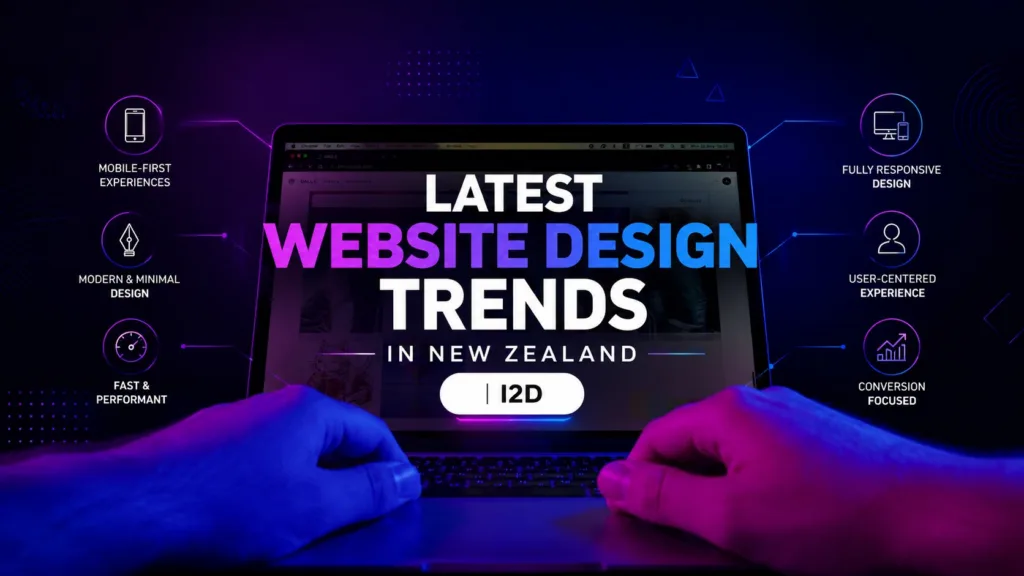
The latest Website Design Trends in New Zealand show that modern web design is becoming more intelligent, more visual and more user-centred. However, not every trend is right for every business. The best choice depends on your audience, brand personality, website goals, budget and content strategy.
An Auckland trades business may benefit most from fast pages, strong mobile calls to action and clear service-area content. A real estate brand may prioritise immersive visuals, property search, mobile-first galleries and trust-building agent profiles. A professional services firm may need authority-led content, accessibility, refined typography and conversion-focused consultation forms. A retail business may focus on ecommerce UX, product recommendations, speed and mobile checkout.
The right approach is to start with the customer journey. Ask what users need to understand first, what might stop them from taking action and what design elements will make the experience easier. From there, trends can be selected strategically. Bento grids, micro animations, AI chat, dark mode, gradients, personalisation and immersive visuals are all useful when they improve the experience.
Ultimately, website design in New Zealand is moving towards a practical balance: creative enough to stand out, simple enough to use, fast enough to keep attention and structured enough to support search visibility. Businesses that adopt trends thoughtfully will be better positioned to build trust, improve engagement and convert more visitors into customers.



 Landing Pages