Understanding the Connection Between Website Design and Conversion Rate
The relationship between website design and conversion rate is fundamental to the success of any local business operating in today’s digital marketplace. A well-crafted website design is not merely an aesthetic endeavour; it is a strategic tool that directly influences whether website visitors become paying customers. The website design conversion rate represents the percentage of visitors who complete a desired action, whether that is making a purchase, submitting an enquiry, or requesting a service. For local businesses in New Zealand, understanding how website design impacts this critical metric is essential for sustainable growth. Whether you are exploring Website Design Auckland services or following a step by step website Design process, recognising the profound impact of design on conversions is the first step toward creating a digital platform that truly drives business results.
“Your website design is your digital storefront. Every element should guide visitors toward taking action.” – Digital Conversion Expert
The Role of User Experience in Conversion Success
User experience (UX) is the cornerstone of effective website design, directly influencing whether visitors remain engaged or abandon your site. A superior user experience reduces friction throughout the customer journey, making it easier for potential customers to find what they need and take desired actions. When website visitors encounter intuitive navigation, fast loading times, and clear messaging, they are significantly more likely to progress toward conversion. Poor user experience, conversely, creates barriers that frustrate visitors and drive them toward competitors. The quality of user experience on your website fundamentally shapes the website design conversion rate, making it a critical consideration for any local business serious about increasing conversions.
Why Website Design Matters for Local Businesses
For local businesses, website design serves as a critical touchpoint in the customer journey. Unlike large corporations with extensive marketing budgets, local businesses must maximise the effectiveness of every digital interaction. A strategically designed website becomes a powerful asset for lead generation and sales conversion. When properly optimised, your website works continuously to turn visitors into customers, even outside business hours. The website design of your site communicates professionalism, trustworthiness, and attention to detail—qualities that local customers value highly when making purchasing decisions. Investing in quality website design is therefore not an optional expense but a necessary investment in your business’s future.
Designing for the Customer Journey
Understanding and optimising the customer journey is essential for creating a website design that effectively increase conversions. Every element of your site should be strategically positioned to guide visitors through a logical progression from awareness to action.
Mapping the Customer Journey
Customer journey mapping is a critical component of the step by step website Design process, involving a detailed analysis of every touchpoint between potential customers and your business. This mapping exercise identifies key moments where visitors make decisions about whether to continue engaging with your site or leave. By understanding the customer journey intimately, you can design your website to address concerns, provide relevant information, and remove obstacles at each stage. Effective customer journey mapping reveals opportunities to increase conversions by streamlining pathways, clarifying messaging, and strategically positioning calls to action. For local businesses, this process ensures that your website design aligns perfectly with how your target audience actually searches for and evaluates local services.
Implementing Strategic Call-to-Action Design
The call to action (CTA) is one of the most critical elements of conversion-focused design. A well-designed call to action serves as the bridge between visitor interest and actual conversion. Button design plays a crucial role in CTA effectiveness, with factors such as colour, size, placement, and messaging all influencing click-through rates. Strategic call to action placement throughout your website guides visitors toward desired actions at optimal moments in their journey. Effective CTA button design creates a sense of urgency and clarity, making it obvious what action visitors should take next. By testing different call to action variations and monitoring their performance, you can continuously improve your website design conversion rate.
Optimising Website Structure and Navigation
The website layout and site navigation are foundational elements that directly impact website conversions. How information is organised and presented significantly influences whether visitors can find what they need and progress toward conversion.
Creating Effective Visual Hierarchy
Visual hierarchy is a fundamental principle of effective website design that guides visitors’ attention toward the most important elements. Through strategic use of size, colour, contrast, and positioning, visual hierarchy establishes a clear order of importance that helps visitors understand your site’s structure and key messages. A well-designed visual hierarchy makes it easier for visitors to scan your content, locate relevant information, and identify calls to action. By implementing strong visual hierarchy throughout your page design, you create a user-centric design that naturally guides visitors toward conversion opportunities.
Effective visual hierarchy techniques include:
- Size Variation: Using larger fonts and elements to emphasise important content and calls to action
- Colour Contrast: Leveraging colour psychology to draw attention to key elements and create visual interest
- Whitespace Utilisation: Creating breathing room around important elements to enhance focus and readability
- Typography Hierarchy: Implementing distinct heading levels and font weights to establish content structure
- Strategic Positioning: Placing high-priority elements in prominent locations (above the fold, centre of page)
- Visual Weight: Using imagery, icons, and design elements to balance and guide visual flow
- Directional Cues: Employing arrows, lines, and visual elements to guide visitors toward conversion points
Designing Intuitive Website Navigation
Website navigation is critical to usability and directly impacts website conversions. Intuitive design principles ensure that visitors can easily find what they are looking for without frustration or confusion. Clear, logical site navigation reduces the cognitive load on visitors, allowing them to focus on evaluating your offerings rather than struggling to find information. User-centric design approaches prioritise simplicity and clarity in navigation, recognising that visitors have limited patience for confusing or convoluted site structures. By implementing intuitive design principles in your website navigation, you create a page structure that facilitates user interaction and supports website conversions.
Responsive Design and Mobile Optimisation
In an era where the majority of internet traffic originates from mobile devices, responsive design and mobile optimisation are no longer optional features—they are essential requirements for effective website design.
The Importance of Mobile Responsiveness
Responsive design ensures that your website functions flawlessly across all devices, from desktop computers to smartphones and tablets. Mobile optimisation is particularly critical for local businesses, as many potential customers search for local services on mobile devices whilst on the go. A website that is not optimised for mobile devices creates a poor user experience, leading to high bounce rates and lost conversion opportunities. Mobile optimisation involves more than simply making your site readable on small screens; it requires rethinking page design and site navigation to accommodate mobile-specific behaviours and constraints. By prioritising responsive design and mobile optimisation, you ensure that your website design conversion rate remains strong regardless of the device visitors use to access your site.
Optimising Page Design for Conversion
Page design optimisation focuses on creating layouts that support website conversions across all devices and screen sizes. Each page should have a clear purpose and guide visitors toward a specific action. Conversion-focused design principles inform decisions about content placement, button design, whitespace, and visual elements. By testing different page design variations and analysing user behaviour data, you can identify the layouts that generate the highest conversion rate. Effective page design balances aesthetic appeal with functional clarity, ensuring that your site is both visually engaging and highly effective at driving conversions.
Leveraging User Behaviour and Analytics
Understanding user behaviour is essential for optimising your website design to increase conversions. Data-driven insights reveal how visitors interact with your site, where they encounter friction, and what motivates them to take action.
Analysing User Behaviour and Engagement
User behaviour analysis involves tracking how visitors interact with your website, including which pages they visit, how long they spend on each page, and where they exit the site. User engagement metrics provide insights into content effectiveness and identify areas where visitors lose interest. By understanding user behaviour patterns, you can identify opportunities to increase conversions by removing barriers, clarifying messaging, and optimising call to action placement. Website performance improvement often begins with a thorough analysis of user behaviour, revealing insights that inform strategic design decisions.
Implementing Conversion Rate Optimisation
Conversion rate optimisation is an ongoing process of testing, measuring, and refining your website design to improve performance. This systematic approach involves identifying high-impact opportunities, implementing changes, and measuring the results. By continuously monitoring your website design conversion rate and implementing data-driven improvements, you create a website that becomes increasingly effective at turn visitors into customers over time.
Key conversion optimisation strategies include:
- Form Simplification: Reducing form fields to minimise friction and increase completion rates
- Page Design Enhancement: Optimising layouts to improve clarity and guide visitors toward conversions
- Navigation Improvement: Streamlining site navigation to help visitors find information quickly
- Call-to-Action Optimisation: Testing call to action messaging, placement, and design for maximum effectiveness
- Content Refinement: Ensuring messaging clearly communicates value and addresses visitor concerns
- Mobile Optimisation: Ensuring all conversion optimisation efforts work seamlessly across devices
Measuring Success and Continuous Improvement
Effective website design is not a one-time project but an ongoing commitment to website performance improvement and customer conversion optimisation. By establishing clear metrics and regularly reviewing performance, you can ensure your site continues to deliver strong results.
Tracking Key Conversion Metrics
To understand the impact of your website design on conversion rate, you must establish clear metrics and track them consistently. Key metrics include overall conversion rate, website enquiries, online sales, lead generation volume, and revenue generated. By comparing these metrics before and after design improvements, you can quantify the impact of your efforts. Regular monitoring of website performance metrics enables you to identify trends, spot problems early, and capitalise on opportunities for website performance improvement.
Optimising for Continuous Growth
Digital marketing strategy that incorporates continuous conversion optimisation ensures that your website remains competitive and effective. By staying attuned to changes in user behaviour, emerging design trends, and technological advancements, you can keep your website design fresh and effective. Regular testing, analysis, and refinement create a culture of continuous improvement that drives sustained growth in website conversions and customer conversion rates. For local businesses committed to long-term success, this ongoing dedication to conversion-focused design and website performance improvement is the key to building a digital asset that consistently delivers measurable business results.
Website Design as a Conversion Driver
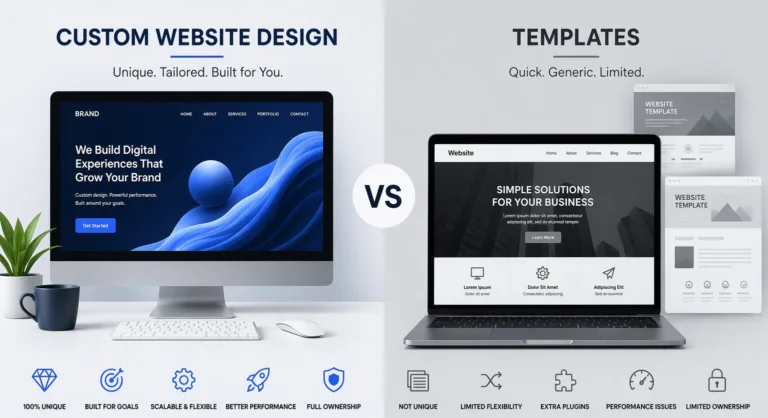
The evidence is clear: website design has a profound impact on conversion rate and business success. When considering Website Design vs Templates, it becomes even more important to follow a step-by-step website design process that prioritises user-centric design, optimises the customer journey, and leverages data-driven insights.
Local businesses can create websites that effectively turn visitors into customers by choosing the right approach. Whether you are exploring Website Design Auckland services or comparing Website Design vs Templates for your own project, remember that every element of your website should support improving your conversion rate and driving sustainable growth.
By investing in quality website design and understanding the difference between Website Design vs Templates, along with committing to continuous conversion optimisation, you build a digital platform that consistently supports your business objectives and delivers measurable returns on investment.



 Landing Pages