 SEO
SEOYour Complete Guide to Google E-E-A-T for SEO Success in 2025
Google’s search algorithms are always changing, so anyone who wants to do SEO well needs to know what E-E-A-T means. This new framework adds Experience...
Read More
Launching a new website is exciting, but the design and content are only part of the work. If search engines cannot crawl, index, understand and...

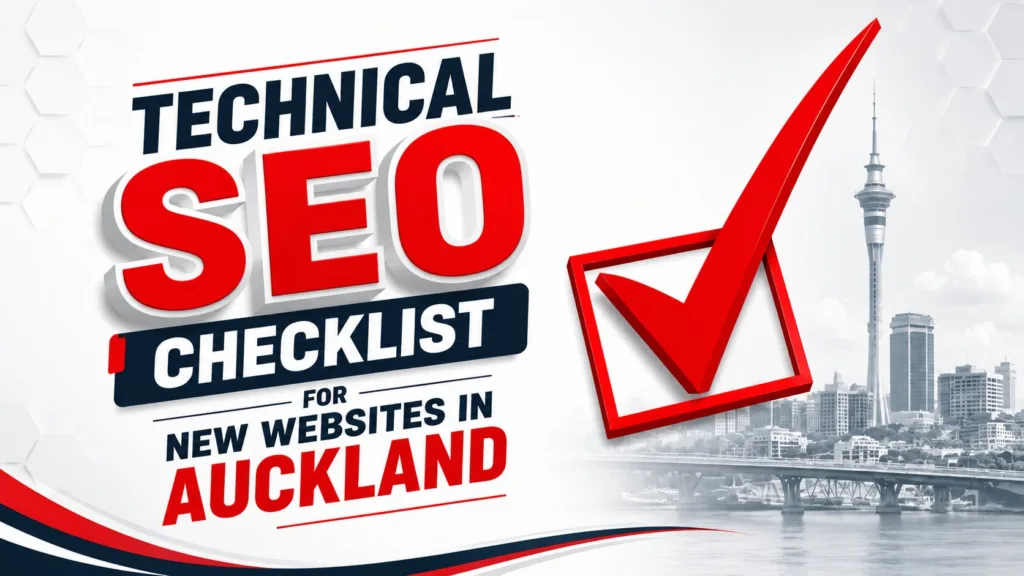
Launching a new website is exciting, but the design and content are only part of the work. If search engines cannot crawl, index, understand and trust the site, even a polished website may struggle to gain visibility. This is why a practical SEO Checklist should be completed before launch, not after the website has already gone live.
For Auckland businesses, technical SEO is especially important because local search is competitive. A new site may be competing with established brands, directories, Google Business Profile listings and service pages that have built authority over time. The right checklist helps you avoid preventable issues, protect future SEO Rankings, and create a stronger foundation for organic traffic.
A technical SEO Checklist gives a new website a clear launch process. Instead of guessing whether the site is search-ready, business owners and developers can confirm that the essentials are in place: analytics, crawlability, indexability, page speed, mobile usability, URLs, metadata, redirects, sitemaps, internal links and security.
Top SEO checklist resources consistently group SEO work into setup tasks, technical checks, keyword research, on-page optimisation and ongoing improvements.
This is useful for Auckland businesses because a new website should not simply be attractive; it should be built so users and search engines can understand it from day one.
Start With Search Visibility Goals
Before checking technical details, define what the new website needs to achieve. A local trades business may want phone calls from nearby suburbs, while a professional services firm may want consultation enquiries. An ecommerce store may need product visibility, and a service provider may need suburb-specific pages.
These goals influence the site structure, keyword mapping and conversion pathways. If the website is planned around business objectives, every technical SEO decision becomes easier to prioritise. For example, a site that depends on local enquiries should pay close attention to location pages, Google Business Profile consistency and clear calls-to-action.
Set Up Essential SEO Tools
A launch-ready website should have the right measurement tools in place. Google Search Console helps monitor search performance, indexing, sitemap submission and crawl-related issues.
Bing Webmaster Tools can provide additional search visibility data, while Google Analytics 4 helps track user behaviour and conversion activity.
These tools matter because SEO cannot be managed properly without data. After launch, they help identify whether pages are being indexed, which search queries are gaining impressions, which pages attract users, and whether technical problems are affecting performance.
Search engines must be able to discover and access your pages before they can rank them. Crawlability refers to whether search engines can move through the website, while indexability refers to whether those pages can be stored and shown in search results. Both are essential for a new website.
Ahrefs includes website structure, descriptive URLs, sitemap submission and indexability checks among its one-time SEO setup tasks.
These items are particularly important during launch because early mistakes can delay visibility and create confusion for search engines.
An XML sitemap helps search engines understand the pages available on a website. It should include important indexable pages such as the homepage, service pages, product pages, blog articles and location pages. After launch, the sitemap should be submitted through Google Search Console and Bing Webmaster Tools.
The robots.txt file should also be reviewed carefully. It can guide search engines on what should or should not be crawled, but errors can accidentally block important content. A simple mistake in robots.txt can prevent key pages from being discovered, which is why this check belongs near the top of any technical SEO Checklist.
New websites should use a logical structure that reflects user intent. A clear architecture usually starts with the homepage, then main service or category pages, supporting subpages, blog content and contact pages. This helps users find information and helps search engines understand page relationships.
URLs should be short, descriptive and relevant. For example, a service page should use a readable URL that reflects the service rather than a random string of numbers. Descriptive URL slugs also make pages easier to understand when they appear in search results or are shared online.
Technical SEO is closely connected to user experience. If a website loads slowly, shifts while loading or is difficult to use on mobile, visitors may leave before taking action. Search engines also consider mobile usability and performance when evaluating pages.
For Auckland businesses, this matters because many customers search on mobile while comparing local options. Someone looking for a plumber, lawyer, real estate service, clinic or web designer may make a decision quickly based on speed, clarity and ease of contact.
A mobile-friendly website should adapt smoothly to phones and tablets. Text should be readable without zooming, buttons should be easy to tap, menus should be simple, and forms should be short enough to complete on a small screen. If contact details are hidden or difficult to use, local leads may be lost.
Mobile-first planning should begin during design and development. Auckland businesses preparing a new site can benefit from aligning performance, search visibility and user experience through professional Website Design Auckland support, especially when the goal is to turn search traffic into enquiries.
Page speed should be tested before launch using tools such as PageSpeed Insights. Common improvements include compressing images, reducing unnecessary scripts, using efficient hosting, limiting heavy animations, caching resources and ensuring the website layout remains stable as it loads.
Core Web Vitals focus on loading performance, interactivity and visual stability. These metrics are not the only SEO factors, but they help measure whether users receive a fast and stable experience. A new website should be built with performance in mind rather than fixed only after complaints or traffic drops.
| Technical area | What to check before launch | Why it matters |
| Crawlability | Sitemap, robots.txt and internal links | Helps search engines discover pages |
| Indexability | No accidental noindex tags or blocked pages | Allows important pages to appear in search results |
| Mobile usability | Responsive layouts, readable text and tap-friendly buttons | Supports local search behaviour on phones |
| Performance | Image compression, caching and Core Web Vitals | Improves user experience and page speed |
| Security | HTTPS and one preferred domain version | Builds trust and avoids duplicate versions |
Technical SEO is not limited to the backend. Every important page should be checked for metadata, headings, content structure, image optimisation, internal links and schema opportunities. Backlinko’s checklist includes on-page SEO, technical SEO, content and keyword research as core areas of SEO work.
For a new Auckland website, this means every service page should have a purpose. Each page should target a clear topic, answer relevant customer questions and guide visitors towards a useful next step.
Title tags help search engines and users understand what a page is about. They should be unique, relevant and aligned with the primary keyword or topic of the page. Meta descriptions do not directly guarantee rankings, but they can influence how users interpret a result before clicking.
A good title tag should not be stuffed with keywords. Instead, it should describe the page naturally and include the most important phrase where appropriate. A good meta description should summarise the value of the page and encourage the right users to visit.
Headings create structure. A single clear H1 should introduce the page topic, while H2 and H3 headings should divide the content into logical sections. This improves readability and helps search engines understand the hierarchy of information.
Images should also be prepared properly. File sizes should be compressed, file names should be descriptive, and alt text should explain the image when relevant. Internal links should connect related pages using descriptive anchor text. This helps users explore the website and helps search engines understand topical relevance.
A new website should be secure, consistent and easy for search engines to interpret. Technical problems such as duplicate domain versions, broken links, missing redirects and incorrect canonical tags can weaken launch performance. These issues are easier to prevent before launch than to repair later.
HTTPS is widely treated as a standard requirement for modern websites, and SEO checklists commonly include it alongside mobile optimisation, page speed and structured data.
For Auckland businesses, HTTPS also supports user trust when visitors submit forms, request quotes or make purchases.
Your website should load securely using HTTPS. It should also resolve to one preferred version of the domain. For example, the site should not be accessible as multiple competing versions with www, non-www, HTTP and HTTPS all loading separately.
When multiple domain versions are available, search engines may treat them as duplicates or split signals across different versions. A clear preferred domain helps consolidate authority and keeps analytics cleaner. This is a simple but important technical SEO launch check.
If a new website replaces an older site, redirects are critical. Important old URLs should be mapped to relevant new URLs using 301 redirects. This helps preserve value from existing pages and prevents users from landing on avoidable error pages.
Broken links should be fixed before launch. Canonical tags should also be reviewed where similar or duplicate pages exist. A canonical tag tells search engines which version of a page should be treated as the preferred version, helping prevent duplication problems.
A technical SEO Checklist does not end when the website goes live. SEO requires ongoing monitoring because search engines recrawl pages, competitors update content, and user behaviour changes. Ahrefs separates checklist work into one-time, periodic and page-by-page tasks, which is a useful model for ongoing SEO management.
For Auckland businesses, ongoing work should include technical audits, content updates, internal link improvements, Google Business Profile updates and performance monitoring. These activities help protect visibility and support long-term growth.
Connect Local SEO Signals
Local SEO should be part of a new website launch. Business name, address and phone details should be consistent across the website and major listings. A Google Business Profile should be created or updated with accurate services, opening hours, photos and links.
Location pages can also support local relevance when they are genuinely useful. They should not be thin duplicates. Instead, they should explain services, service areas, customer needs and local context in a natural way.
Schedule Regular Site Audits
After launch, schedule regular technical SEO checks. These audits should look for crawl errors, indexing issues, broken links, slow pages, missing metadata, declining content, sitemap problems, redirect chains and mobile usability issues.
Content should also be reviewed over time. Pages that lose traffic may need refreshed information, better internal links, improved headings or clearer answers to search intent. A new website is the starting point, but ongoing maintenance is what protects SEO performance.
Final Technical SEO Checklist for New Auckland Websites
A new website should launch with the core technical foundations already in place. That means analytics and search tools are configured, pages are crawlable and indexable, mobile usability has been tested, page speed is optimised, metadata is written, internal links are planned, HTTPS is active and local SEO signals are consistent.
The most effective SEO Checklist is not a one-off document. It is a working process that supports launch, growth and long-term search visibility. For Auckland businesses, this process can make the difference between a website that simply exists and a website that earns traffic, enquiries and stronger SEO Rankings over time.
SEOGoogle’s search algorithms are always changing, so anyone who wants to do SEO well needs to know what E-E-A-T means. This new framework adds Experience...
Read More SEO
SEOYour online presence can be made or broken by the right SEO Auckland agency. There are hundreds of agencies that say they are the best....
Read More SEO
SEOMaking a beautiful website is only the first step. Without proper on-site SEO, even the most stunning designs remain invisible to potential customers searching online....
Read More