 Development
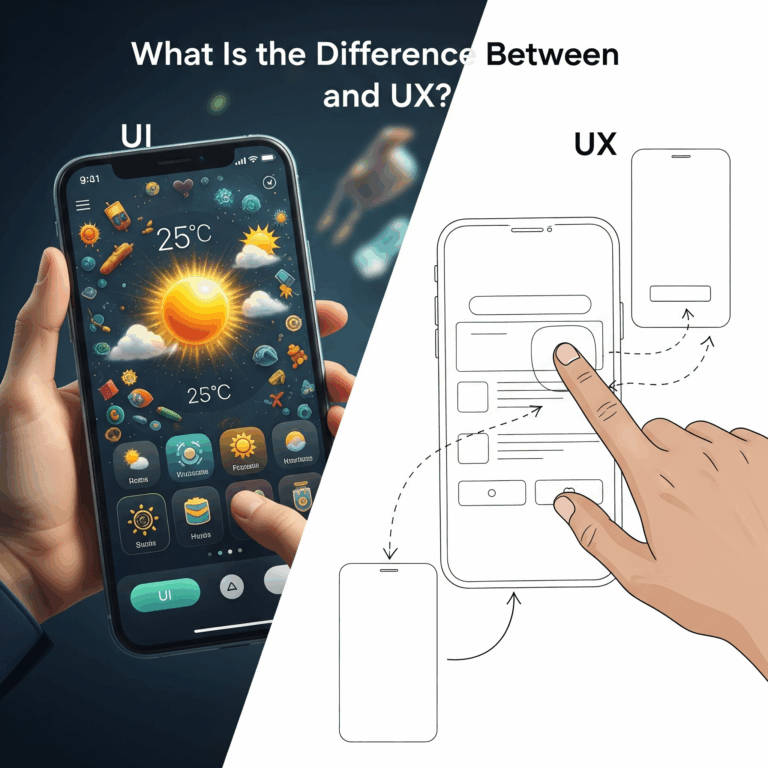
What Is the Difference Between UI and UX? A Complete i2d Guide
When browsing websites or using mobile apps, you’ve likely encountered the terms UI and UX. These buzzwords appear everywhere in the digital world, yet many...
Read More
A good website is more than just a nice-looking brochure. It’s often the first thing a customer sees about your brand, a great way to...


A good website is more than just a nice-looking brochure. It’s often the first thing a customer sees about your brand, a great way to sell things, and the main place where you do your marketing. If your site doesn’t work well for users, they might go to your competitors. But if it does work well, it can greatly increase engagement and conversions.
But how does a great website come to life? It’s not magic; it’s a journey that is planned and done with others. This guide will show you the five main steps that make up the modern web design process. If you know these steps, you’ll be able to work well with a design agency and make sure the final product meets your business needs.
A good plan is the first step in any successful project. This first step is probably the most important because it sets the stage for everything that comes after it. The goal here is to agree on the “why” of the site. To really get to know your business, your audience, and your goals, you need to have deep conversations.
We need to figure out what success means first. Are you trying to get people to sign up for your email list, buy something, join your community, or learn more about your brand? Every choice made during the website design process will be guided by clear, measurable goals.
Next, we need to know who we are making it for. We will make detailed user personas that show who your best customers are. We’ll ask things like:
Now that we know the goals and the audience, we can outline the project’s scope. This means listing all the things the website will be able to do and have. For instance, will it need a blog, an online store, a customer portal, or support for more than one language?
We then make a sitemap. This is a high-level flowchart that shows how your website is set up, including the order of the pages and how they are linked. A logical sitemap makes it easy for users to find what they need on your site without getting lost.
We make wireframes before we start any visual design work. These are simple, black-and-white plans for the most important pages of your website. Wireframes only show the structure, layout, and flow of the user. They don’t show any colors or images. This lets us plan where important parts like navigation, calls to action, and content blocks will go, making sure the layout is easy to use.

It’s time to make the design come to life once the blueprint is approved. This step is about giving your website a look and feel that fits your brand and gets people interested in it. You do this by turning the functional wireframes into a design.
We give the website its personality during the design phase. Important parts are:
We put these things together to make a UI (User Interface) style guide or mockups. These are high-fidelity designs that show exactly what the final website will lo
Once the design is approved, our developers get to work making the static visual mockups into a real, working website. This is the most technical part of the web design process, where all the magic happens behind the scenes.
Most of the time, web development is divided into two parts:
Throughout this phase, our team adheres to strict coding standards and best practices. This ensures the website is secure, scalable, and easy to maintain in the future.
It is important to test the website thoroughly before it goes live. A single bug or broken link can make users angry and hurt your brand’s reputation. The goal of this step is to find and fix any problems so that the launch goes smoothly and without any problems.
Our quality assurance (QA) team tests the website on different devices and browsers, such as Chrome, Firefox, and Safari, to make sure that all users have the same experience. The testing process covers:
It’s time to launch the website once all the bugs have been fixed and it looks good. This means moving the site from a staging server to your live domain and setting up your hosting environment. We do one last check, then we flip the switch and your new website is live for everyone to see.
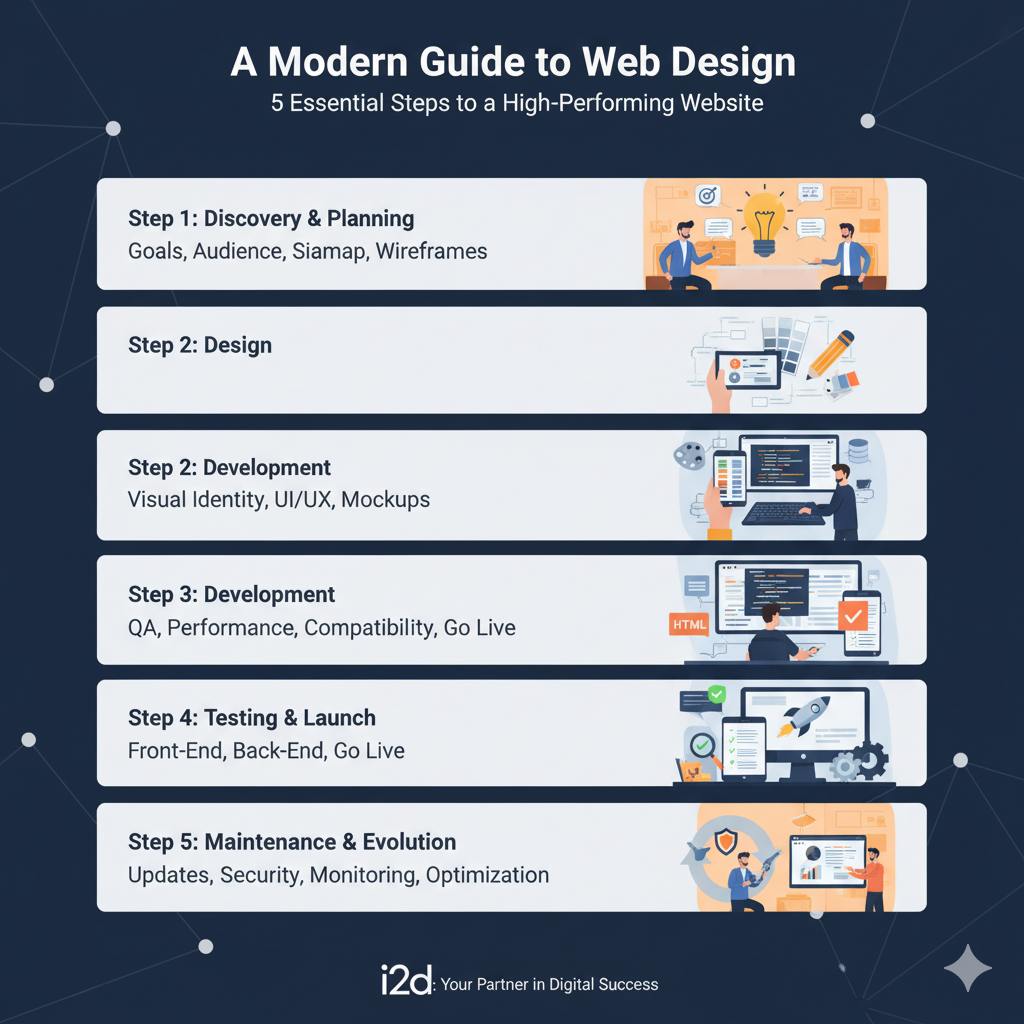
Launching a website isn’t the end of the journey; it’s the beginning of a long-term partnership. A website is a living asset that needs to be taken care of all the time to stay useful, safe, and up-to-date.
There are many reasons why regular maintenance is important. It ensures your site remains secure from potential threats, runs at optimal speed, and continues to function correctly as browsers and plugins are updated. Key maintenance tasks include:
In addition to keeping the technology running, we also look at user data to find ways to make things better. We can use metrics like traffic, bounce rate, and conversion rates to make changes based on data that will improve the user experience and help you reach your business goals.
It takes a lot of skill in strategy, design, and development to do web design. It’s a long, complicated process. We can turn your idea into a high-performing website that not only looks great but also gets results for your business by following a structured process.
We’re here to help you start this journey and make a website that really shows off your brand. Set up a meeting with the i2d team so we can work together to make something great.
DevelopmentWhen browsing websites or using mobile apps, you’ve likely encountered the terms UI and UX. These buzzwords appear everywhere in the digital world, yet many...
Read More Development
Most Auckland businesses pour thousands of dollars into Google Ads and SEO content — then watch their rankings plateau. The culprit? A slow website that...
Read More Development
A business website is no longer something you build once and leave untouched. For New Zealand businesses, your website can be one of your most...
Read More