 SEO
SEOYour Complete Guide to Google E-E-A-T for SEO Success in 2025
Google’s search algorithms are always changing, so anyone who wants to do SEO well needs to know what E-E-A-T means. This new framework adds Experience...
Read More

In today’s hyperconnected digital world, the concept of “local” has undergone a profound transformation. Whilst traditional local SEO once meant optimising for an entire city...

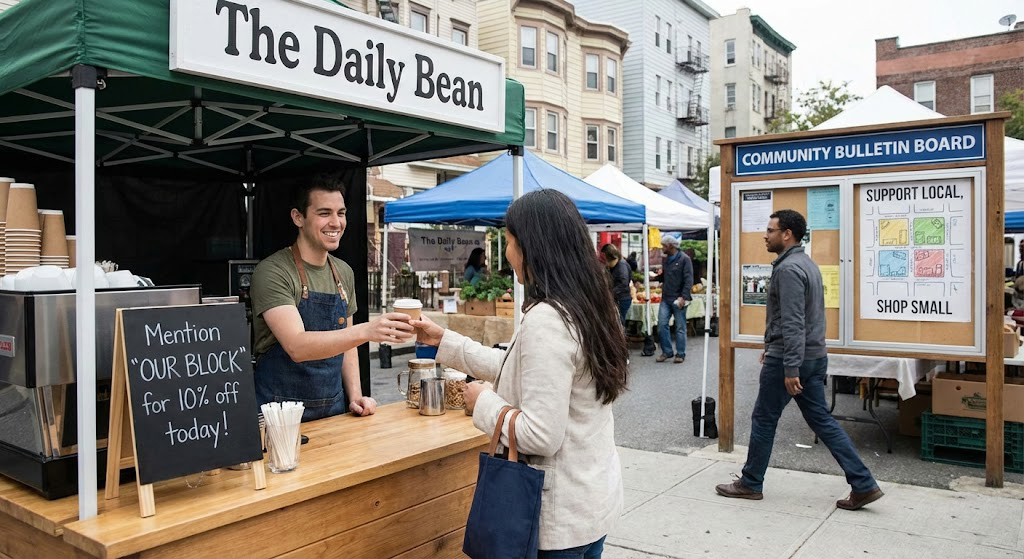
In today’s hyperconnected digital world, the concept of “local” has undergone a profound transformation. Whilst traditional local SEO once meant optimising for an entire city or region, the landscape has shifted dramatically towards what industry experts now call hyperlocal search engine optimisation. For small businesses in New Zealand and beyond, understanding and implementing hyperlocal strategies is no longer optional, it’s essential for survival and growth. This comprehensive guide explores how businesses can leverage local SEO techniques to dominate micro-neighbourhoods and win customers in increasingly specific geographic areas.
Hyperlocal search represents a fundamental shift in how consumers discover local businesses. Rather than searching for “coffee shop in Auckland,” today’s customers are searching for “best flat white near Ponsonby” or “café on Karangahape Road.” This granular approach to local search reflects broader changes in consumer behaviour, driven by mobile technology, voice search, and AI-powered assistants that prioritise specificity and convenience.
The journey from traditional local SEO to hyperlocal optimisation represents a natural evolution in search behaviour. Traditional local SEO focused on helping businesses rank within a city or metropolitan area, relying primarily on basic location information and broad keywords. Hyperlocal SEO, by contrast, targets extremely specific geographic areas—sometimes as small as a single street, neighbourhood block, or district. This shift is driven by several converging factors. First, mobile devices have become the primary search tool for most consumers, and mobile users typically search for solutions to immediate, nearby needs. Second, voice search has become increasingly prevalent, with 60% of local searches now occurring through voice assistants like Google Assistant and Alexa by 2025. These voice queries tend to be highly conversational and location-specific, such as “where can I find a plumber near me right now?” Third, Google’s algorithm has evolved to prioritise neighbourhood-specific entities and community authority signals, rewarding businesses that demonstrate deep roots in their local communities.
Micro-neighbourhoods represent the new frontier of local search. These tightly defined geographic areas—whether it’s a specific suburb, a commercial district, or even a particular street—have become increasingly important to consumers and search engines alike. By mid-2025, it’s projected that 40% of all Google searches will be hyperlocal in nature, reflecting a fundamental shift in consumer expectations. For small businesses, this represents both a challenge and an unprecedented opportunity. The challenge lies in the increased competition within these micro-markets; the opportunity lies in the ability to establish deep, meaningful connections with nearby customers who are actively searching for exactly what you offer.
Your Google My Business profile is arguably the single most important asset in your hyperlocal SEO arsenal. Unlike a traditional website, which serves a broader audience, your Google My Business profile is specifically designed to connect you with customers searching for your business in your immediate area. Optimising this profile for hyperlocal success requires a strategic, detailed approach.
To dominate hyperlocal search results, your Google My Business profile must clearly communicate which neighbourhoods and micro-communities you serve. Begin by crafting a business description that naturally incorporates neighbourhood names and local landmarks. Rather than simply stating what you do, describe what you do whilst highlighting your connection to specific areas. For example, instead of “We offer plumbing services,” try “Serving plumbing solutions to Ponsonby, Grey Lynn, and Freemans Bay residents for over 15 years.” This approach signals to both Google and potential customers that you have deep expertise in these specific areas.
Additionally, ensure that your profile includes high-quality, geo-tagged photos that showcase your business in its actual location. These photos should include visible neighbourhood markers or landmarks that help establish your hyperlocal presence. Update your profile seasonally to reflect changes in your neighbourhood and demonstrate ongoing engagement with your community. This consistent activity signals to Google that your business is active and engaged, which boosts your visibility in local search results.
Online reviews have become the currency of local trust, and they’re particularly powerful in hyperlocal search. Businesses that maintain a high volume of positive reviews—ideally 100 or more with an average rating of 4.5 stars or higher—appear in 92% of AI search recommendations. This statistic underscores the critical importance of review management in your hyperlocal strategy.
Implement a systematic approach to soliciting reviews from satisfied customers. This might involve sending follow-up emails after purchases, including review requests in receipts, or offering small incentives for leaving reviews. However, it’s equally important to respond to every review, whether positive or negative. When you respond to reviews, you’re not just addressing individual customers; you’re signalling to Google that your business is actively engaged with its community. Furthermore, encourage customers to include neighbourhood-specific details in their reviews. Whilst you cannot directly edit customer reviews, you can gently suggest in your review requests that customers mention their neighbourhood or specific landmarks. When half your reviews mention local area details and nearby landmarks, the cumulative effect significantly boosts your hyperlocal SEO performance.
In the age of hyperlocal search, generic content is virtually worthless. Search engines and customers alike demand content that speaks directly to the unique characteristics, challenges, and interests of specific neighbourhoods. This is where content strategy becomes a cornerstone of your hyperlocal SEO success.
Begin by conducting thorough research into each neighbourhood you serve. What are the demographics? What are the local challenges and opportunities? What events and traditions matter to residents? What landmarks are important? Once you’ve gathered this intelligence, create neighbourhood-specific landing pages on your website that address these unique characteristics. For example, a fitness studio might create separate landing pages for each neighbourhood it serves, highlighting which classes are most popular in each area, featuring testimonials from neighbourhood residents, and discussing how the studio supports local community events.
Your content should include natural references to neighbourhood names, local landmarks, and community features without appearing forced or over-optimised. Share local success stories, discuss area-specific pricing or promotions, and create content that addresses neighbourhood-specific challenges. A plumber serving multiple neighbourhoods might create blog posts like “Common Plumbing Issues in Older Ponsonby Homes” or “How to Winterise Your Pipes in Grey Lynn’s Climate.” This approach establishes you as a neighbourhood expert whilst improving your visibility in hyperlocal search results.
Hyperlocal authority extends far beyond your website. Search engines now assess community engagement signals, including partnerships with local schools and charities, participation in neighbourhood associations, and mentions in community newsletters and platforms like Nextdoor. To build genuine hyperlocal authority, you must become an active, visible member of your community.
Consider sponsoring local events, sports teams, or school programmes. Participate actively in your local chamber of commerce or business improvement district. Host workshops or open houses at your facility. Volunteer your company’s time and expertise for community improvement projects. These activities generate goodwill and authentic community connections, which translate into backlinks from local websites, mentions in neighbourhood publications, and positive word-of-mouth marketing. When Google’s algorithm assesses your business, it now considers these community engagement signals as indicators of trustworthiness and relevance.
Whilst content and community engagement are crucial, the technical foundation of your hyperlocal SEO strategy is equally important. Search engines rely on structured data to understand your business, the areas you serve, and your relevance to specific neighbourhoods.
Implement comprehensive schema markup on your website to help search engines understand your business and its hyperlocal focus. Include local business schema with your name, address, phone number, and hours of operation. More importantly, use the areaServed field to specify which neighbourhoods you serve. For example: “areaServed”: “Ponsonby, Grey Lynn, Freemans Bay, Auckland.” This structured data makes it significantly easier for search engines and AI systems to understand your hyperlocal relevance.
Additionally, implement review schema to mark up your customer reviews, event schema for local events you sponsor or participate in, and product or service schema for location-specific offerings. This structured data helps your business appear in AI-generated answers and recommendations, which is increasingly important as voice search and AI assistants become the primary way consumers discover local businesses.
Your website’s URL structure should reflect your hyperlocal focus. Consider using a structure like “yourbusiness.com/auckland/ponsonby/services” or “yourbusiness.com/services/auckland/ponsonby.” This logical, hierarchical structure makes it easier for search engines to understand your geographic focus and helps users navigate your site intuitively. Each neighbourhood-specific page should have unique, valuable content rather than simply duplicating content with different location names.
For businesses ready to push beyond the fundamentals, several advanced tactics can provide additional competitive advantage in hyperlocal search.
Geofencing technology allows you to create virtual boundaries around specific locations and trigger targeted advertisements when potential customers enter those areas. This is particularly effective for retail businesses, restaurants, and service providers. For example, a café in Ponsonby could set up geofencing around nearby office buildings to target workers during lunch hours, or around competing cafés to reach customers considering alternatives.
Identify high-value landmarks, transit hubs, and community gathering places in your neighbourhood. Create content that references these landmarks and optimise for searches that include them. A hotel might optimise for “accommodation near Auckland Museum” or “hotels within walking distance of Ponsonby Central.” This approach taps into the way customers actually search for local businesses, often using landmarks as reference points.
Different neighbourhoods have different seasonal patterns and local events. Create content and promotions that align with these neighbourhood-specific rhythms. A garden centre might create content about preparing gardens for Auckland’s specific climate, whilst a restaurant might promote seasonal menus that feature local ingredients or tie into neighbourhood events.
For many small businesses, implementing a comprehensive hyperlocal SEO strategy can feel overwhelming. This is where partnering with experienced local SEO companies becomes invaluable. When evaluating local SEO companies, look for partners that demonstrate deep understanding of hyperlocal strategies, not just traditional local SEO. The right local SEO companies should offer services including neighbourhood-specific keyword research, Google My Business optimisation, hyperlocal content creation, review management, and community engagement strategies. They should also provide transparent reporting on hyperlocal metrics and demonstrate a track record of success in helping businesses dominate micro-neighbourhoods.
For businesses in New Zealand seeking specialised expertise, SEO Auckland represents a prime example of hyperlocal SEO excellence, offering tailored strategies specifically designed for Auckland’s unique market dynamics and neighbourhood characteristics.
Success in hyperlocal SEO requires clear metrics and ongoing optimisation. Track your rankings for neighbourhood-specific keywords, monitor your Google My Business insights to understand how customers are finding you, and measure foot traffic and conversions from hyperlocal sources. Pay attention to which neighbourhoods are driving the most business, and double down on strategies that are working whilst adjusting approaches that aren’t delivering results.
As we move further into 2026 and beyond, hyperlocal search will continue to evolve. Voice search will become even more prevalent, AI assistants will become more sophisticated in understanding neighbourhood context, and consumer expectations for hyperlocal relevance will only increase. Businesses that embrace hyperlocal SEO strategies now will be well-positioned to dominate their micro-markets for years to come.
The rise of hyperlocal SEO represents a fundamental shift in how small businesses can compete and win. By focusing intensely on specific neighbourhoods, creating neighbourhood-specific content, building genuine community authority, and optimising your digital presence for hyperlocal search, you can establish your business as the go-to solution for customers in your micro-market. The businesses that will thrive in 2026 and beyond are those that understand their neighbourhoods deeply and communicate that understanding through every aspect of their digital presence. Start implementing hyperlocal strategies today, and watch as your business becomes the dominant force in your neighbourhood.
SEOGoogle’s search algorithms are always changing, so anyone who wants to do SEO well needs to know what E-E-A-T means. This new framework adds Experience...
Read More SEO
SEOYour online presence can be made or broken by the right SEO Auckland agency. There are hundreds of agencies that say they are the best....
Read More SEO
SEOMaking a beautiful website is only the first step. Without proper on-site SEO, even the most stunning designs remain invisible to potential customers searching online....
Read More